|
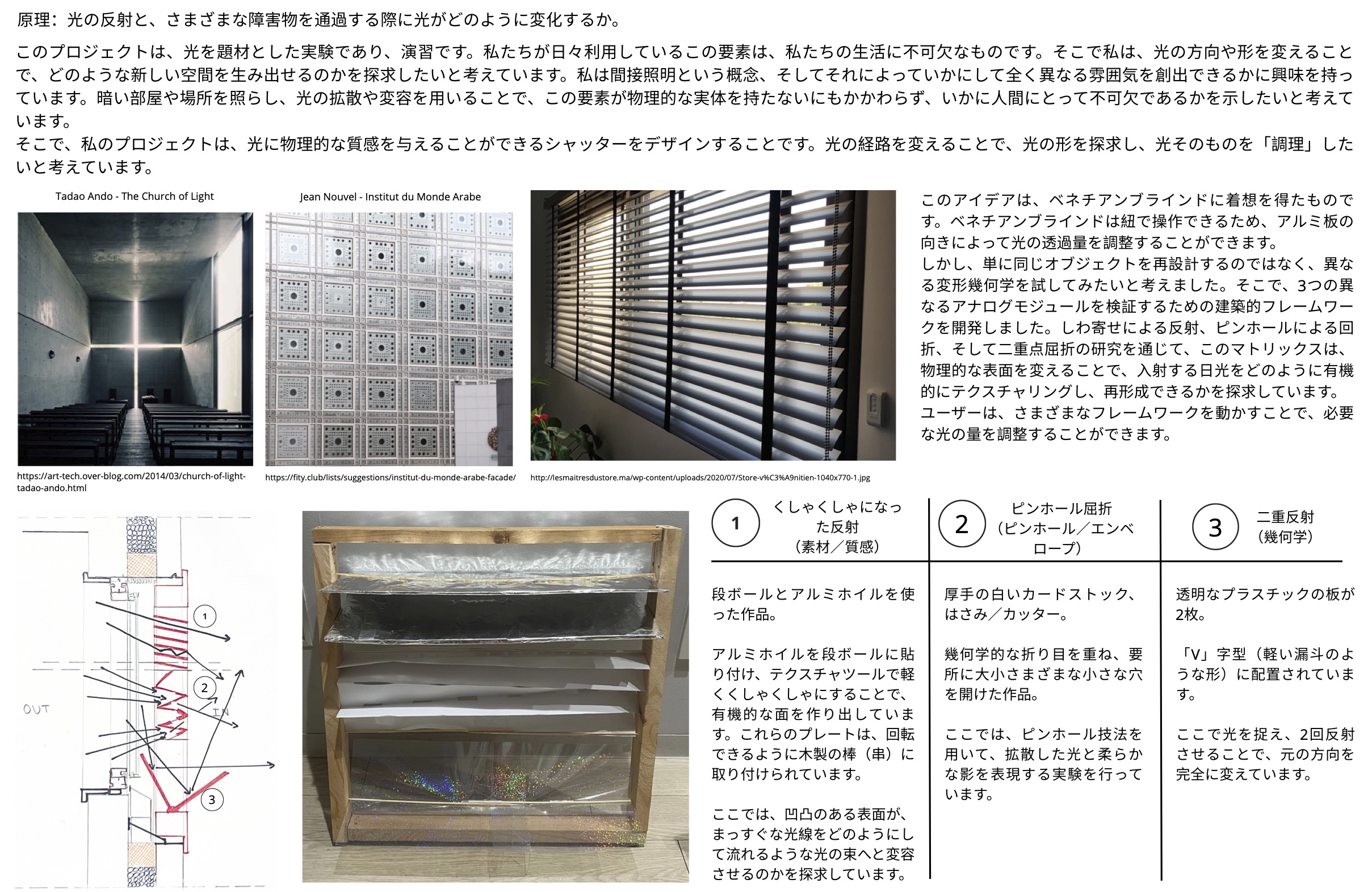
This experiential project explores how changing the direction and shape of daylight can create entirely new architectural atmospheres. Inspired by the mechanism of a venetian blind, the project seeks to move beyond mere re-design by constructing an architectural framework to test three unique analog modules. It introduces "Crumpled Reflection" using textured aluminum foil to turn beams into liquid light, "Pinhole Refraction" through perforated geometric folds to generate soft shadows, and "Double Reflection" with V-shaped clear plastic to completely alter light paths. By manipulating these physical surfaces to "cook" and texture light, the project empowers users to dynamically control the environment, inviting diverse human activities into formerly dark spaces.
日光の方向や形を変えることで、空間に全く異なる雰囲気をもたらす実験的なプロジェクトである。紐でアルミ板の向きを操るベネチアンブラインドの仕組みに着想を得つつ、単なる再設計を回避し、3つの異なるアナログモジュールを検証する建築的枠組みを発明した。アルミホイルの凹凸で直射光を流動化させる「くしゃくしゃになった反射」、大小の穴と折り目で柔らかな影を作る「ピンホール屈折」、V字の透明板で光を2回跳ね返す「二重反射」を構想した。物理的な表面操作を通じて光を「調理」し質感を与えることで、ユーザーの調光による多様なアクティビティを暗い空間に誘発させる装置を提案している。 |
|
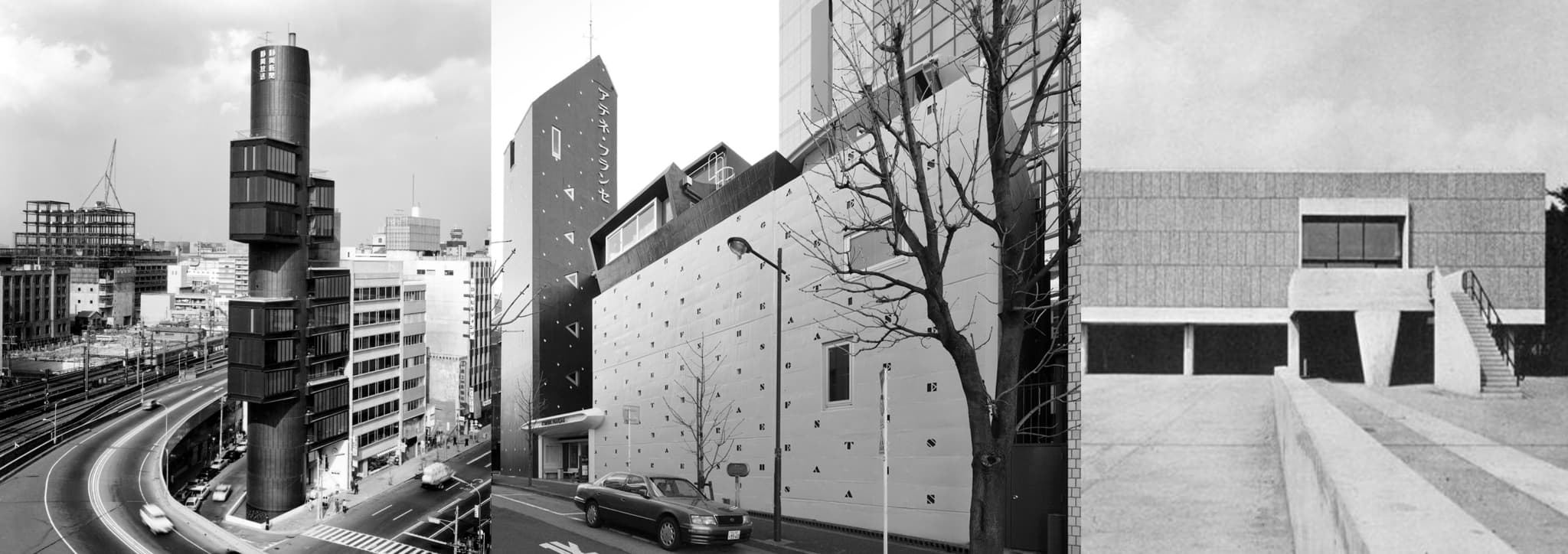
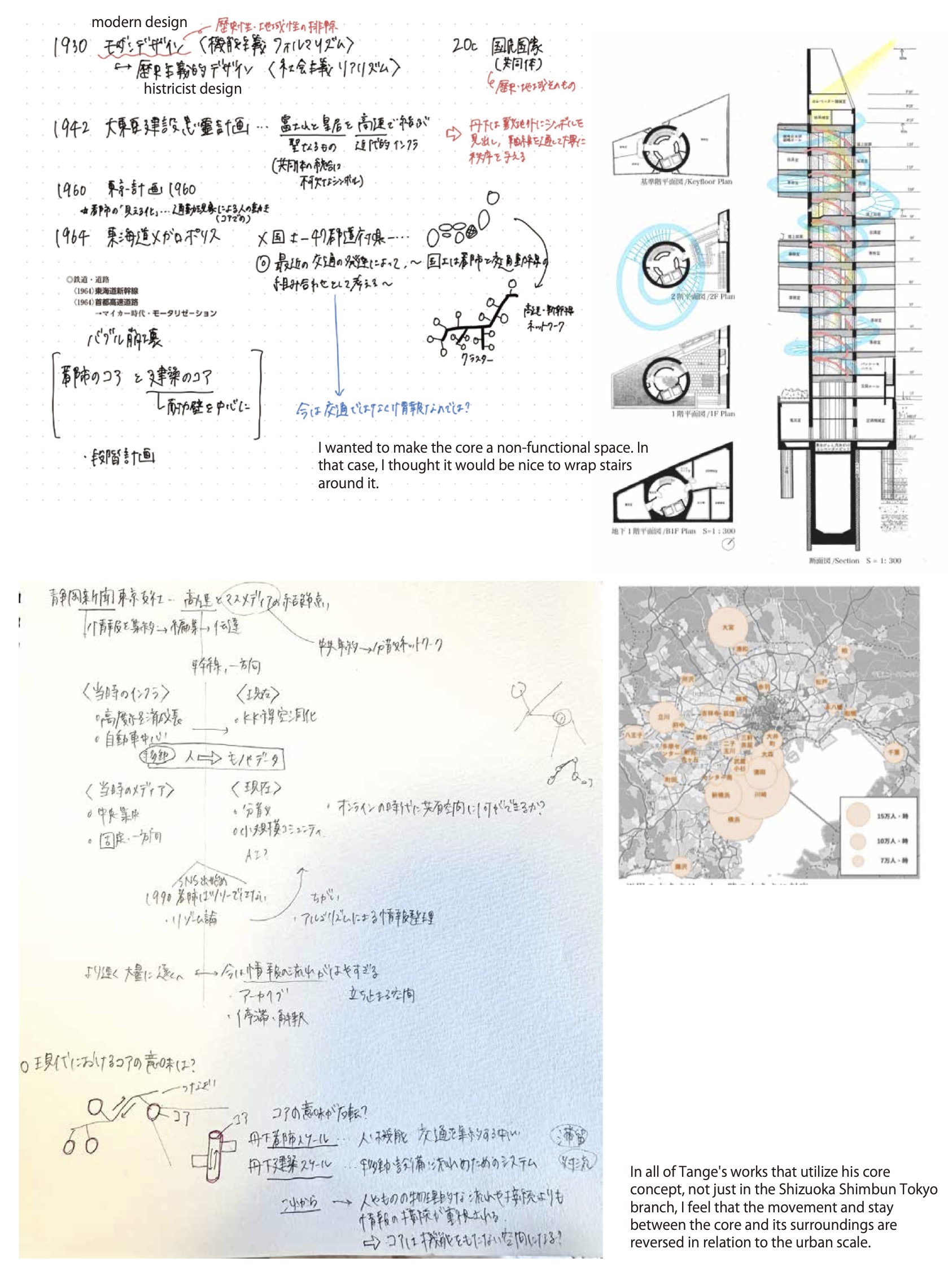
This project reimagines Kenzo Tange’s "Shizuoka Shimbun Shizuoka Broadcasting Tokyo Branch" through a contemporary conversion. Tange’s original architecture focused on linear transportation and industrial efficiency, which the presenter argues partitions the modern city. In today's digital era, where information flow surpasses physical movement, the project reinterprets urban infrastructure not as straight lines, but as a multi-layered network resembling the "cosmic bubble structure". By converting Tange’s infrastructural core into a "non-functional, void-like space" where stairs wrap around, it blends diverse layers like local neighborhoods and lingering areas. This structural inversion creates a theatrical knot where varying speeds and human attitudes intersect, offering a space to stop and stay.
丹下健三設計の「静岡新聞静岡放送東京支社」のコア思想を、現代のコンバージョンとして再考する計画である。かつての工業化・モータリゼーション時代の均質な交通インフラが都市を分断していると捉え、効率的な「線」の移動よりも情報が重視される現代において、都市を「宇宙の泡(バブル)構造」のような多層的ネットワークへ転換することを目指す 。丹下建築の特徴である都市スケールのコアを、階段が巻き付く「機能を持たない空虚な空間」へと反転した。近所付き合いや滞在空間のレイヤーを貫通させ、オンライン時代における「立ち止まり、停滞できる空間」として、人々の速度や態度の差が演劇的空間を生み出す結節点を創出している。 |
|
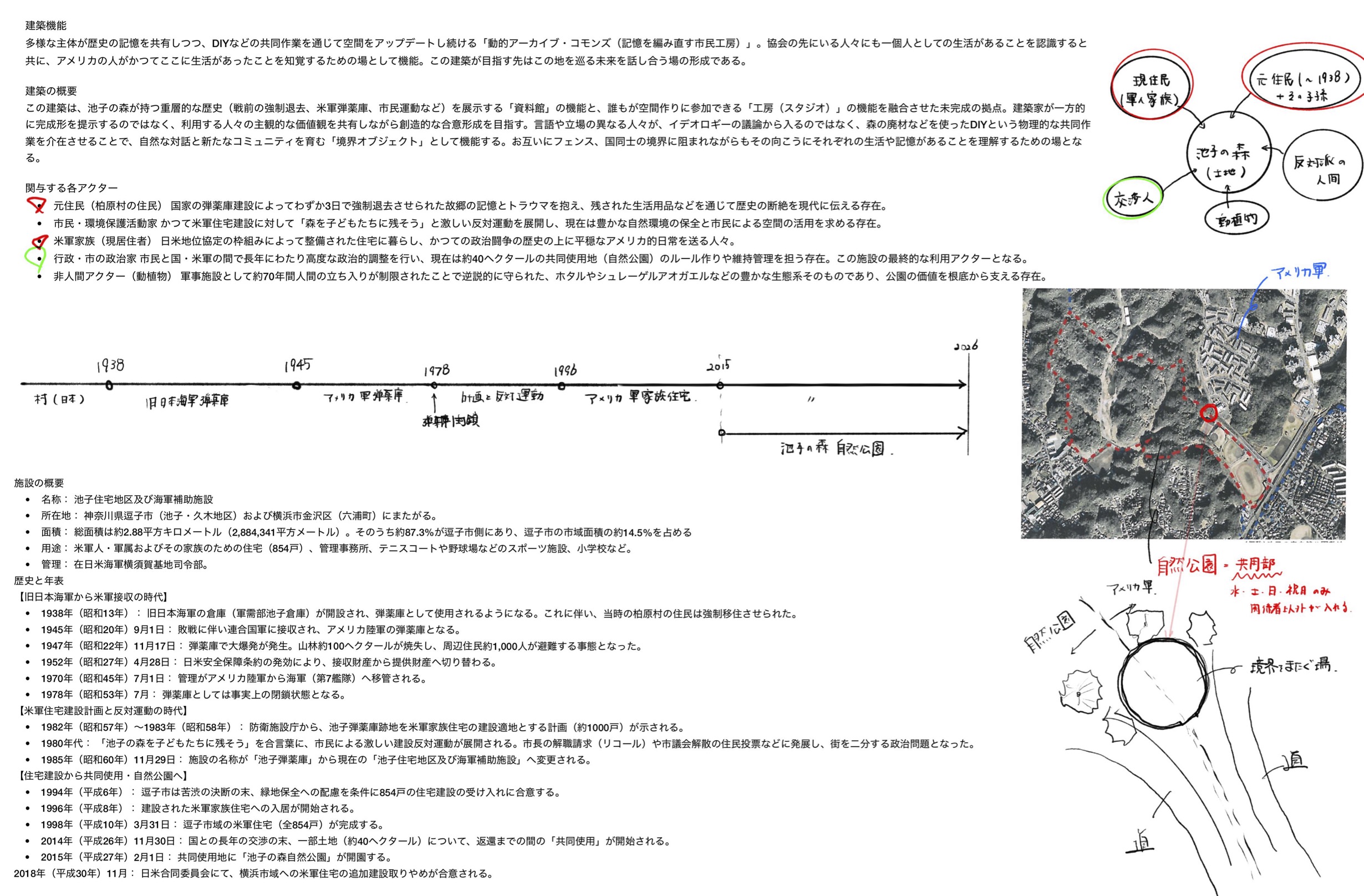
This project proposes a "Dynamic Archive Commons" located at Ikego Forest, a site layered with complex histories including pre-war forced evictions, a former Imperial Japanese Navy ammunition depot, a US military ammunition depot, and civic environmental movements. While the site is currently used as a joint-use natural park and US military family housing , severe physical fences and political boundaries separate the residents. Instead of initiating ideological debates, the project designs a citizen workshop and museum. By introducing collaborative, hands-on DIY activities using local forest waste materials, it functions as a "boundary object". It aims to foster natural dialogue, weave individual life memories together, and build a creative consensus for the future of the community.
戦前の強制退去、旧日本海軍や米軍の弾薬庫、激しい環境保護運動など、重層的な歴史を持つ「池子の森」を舞台とした設計提案である。現在、現地は日米共同使用の自然公園と米軍家族住宅地となり、フェンスという物理的・政治的境界で分断されている。本計画は、イデオロギーの議論から入るのではなく、森の廃材などを用いたDIYという共同作業を介在させる「動的アーカイブ・コモンズ(市民工房)」と資料館の融合を提案する。立場や言語の異なるアクターたちが空間のアップデートに関与し、フェンスの向こう側にある生活や記憶を相互に知覚し合うことで、未来の合意形成に向けた新たな共同態の拠点を形成することを目指している。 |
Copyright (C) 2014 Watanabe Taishi Laboratory, Department of Architecture, Waseda University. All Rights Reserved.